

Ethan Caldwell
Crypto Analyst
Non‑fungible tokens (NFTs) have become a significant part of the digital economy, offering a new way to represent ownership of unique assets. While much of the attention surrounding NFTs focuses on digital art and collectibles, the underlying technology that powers them is equally important. At the core of every NFT lies a smart contract—a self‑executing piece of code that defines how the asset functions, behaves, and transfers ownership.
Understanding the role of smart contracts is essential to grasp how NFTs operate and why they have the potential to transform multiple industries.
What Are Smart Contracts?
Smart contracts are programs stored on a blockchain that automatically execute actions when predefined conditions are met. Unlike traditional contracts, which require intermediaries such as lawyers or institutions, smart contracts operate independently and are enforced by code.
In the context of NFTs, smart contracts are responsible for creating the token, assigning ownership, and managing transactions. They ensure that the rules governing the NFT are transparent, consistent, and tamper‑proof.
How Smart Contracts Enable NFTs
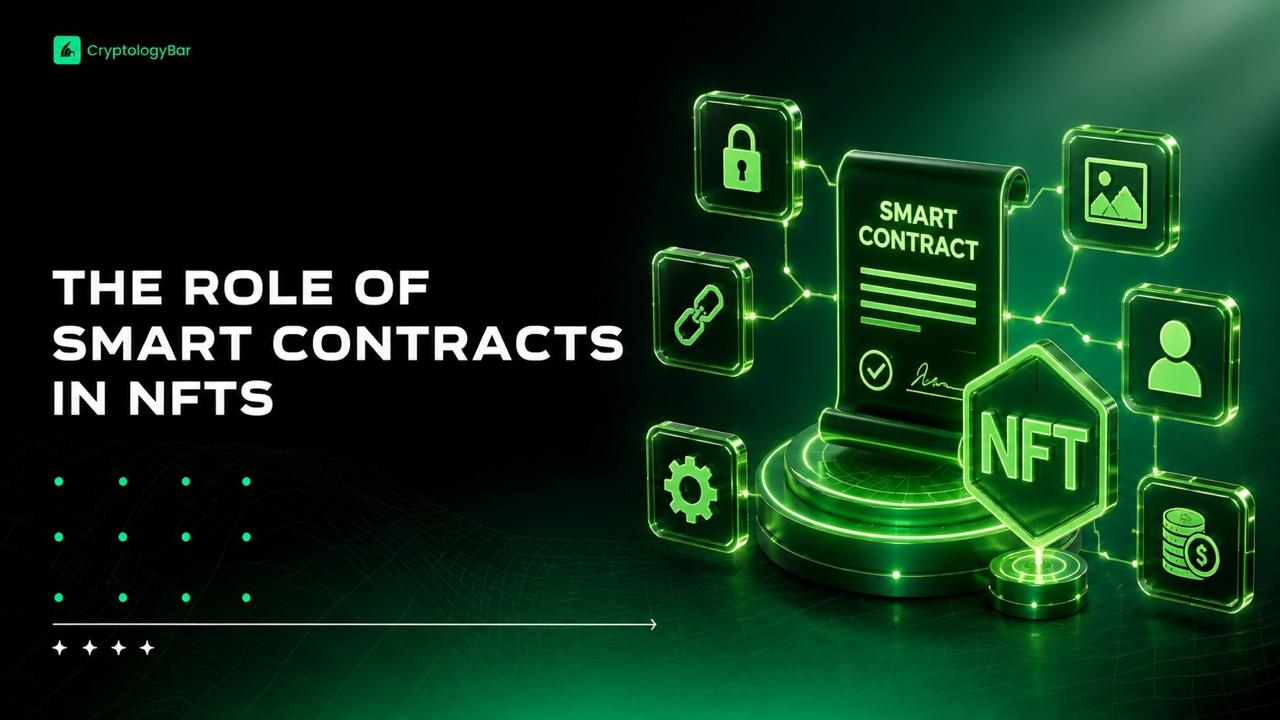
NFTs would not exist without smart contracts. These contracts define the essential properties that make an NFT unique and non‑interchangeable. Each NFT is associated with a smart contract that contains information such as:
Ownership details
Metadata (e.g., image, description, attributes)
Transfer rules
Royalty structures
When an NFT is created, or "minted," the smart contract generates a unique token on the blockchain. This token serves as proof of ownership and authenticity, distinguishing it from any copies of the associated digital asset.
Automating Ownership Transfers
One of the most powerful features of smart contracts is their ability to automate transactions. When an NFT is bought or sold, the smart contract executes the transfer of ownership without the need for intermediaries.
This process is not only faster but also more secure. The blockchain records every transaction, creating a transparent and immutable history. Buyers can verify the authenticity and ownership lineage of an NFT before making a purchase, reducing the risk of fraud.
Enabling Creator Royalties
Smart contracts have introduced a groundbreaking feature for creators: automated royalties. Traditionally, artists and creators only earn from the initial sale of their work. However, with NFTs, smart contracts can be programmed to allocate a percentage of each resale back to the original creator.
For example, if an NFT is resold multiple times, the smart contract ensures that the creator receives a predefined share of each transaction. This creates a sustainable revenue model and aligns incentives between creators and collectors.
Enhancing Transparency and Trust
Transparency is a fundamental advantage of blockchain technology, and smart contracts play a key role in maintaining it. All the rules and conditions governing an NFT are embedded in the smart contract and can be publicly viewed.
This openness builds trust among participants. Buyers know exactly what they are purchasing, and creators can ensure that their work is protected. The elimination of intermediaries also reduces the potential for manipulation or disputes.
Customizing NFT Functionality
Smart contracts allow developers to create highly customizable NFTs with unique features. Beyond simple ownership, NFTs can include functionalities such as:
Unlockable content (e.g., exclusive media or experiences)
Time‑based access or expiration
Integration with other platforms or applications
Dynamic attributes that change based on conditions
This flexibility enables a wide range of use cases, from gaming and entertainment to real estate and identity verification.
Applications Across Industries
The versatility of smart contracts extends the use of NFTs beyond digital art. In gaming, for instance, smart contracts manage in‑game assets, ensuring that players truly own their items and can trade them freely.
In the music industry, artists can use NFTs to distribute content and receive royalties automatically. In real estate, smart contracts can streamline property transactions by automating processes such as ownership transfer and payment verification.
Even in supply chain management, NFTs powered by smart contracts can track the origin and movement of goods, enhancing transparency and accountability.
Security Considerations
While smart contracts offer many advantages, they are not without risks. Because they are written in code, any errors or vulnerabilities can be exploited. Once deployed, smart contracts are difficult to modify, making it crucial to ensure their accuracy before launch.
Developers often conduct audits and testing to identify potential issues. As the technology matures, best practices and standards are emerging to improve the security and reliability of smart contracts.
Challenges and Limitations
Despite their potential, smart contracts face several challenges. Scalability remains a concern, as high network activity can lead to increased transaction costs and slower processing times. Additionally, the complexity of coding smart contracts can limit accessibility for non‑technical users.
Regulatory uncertainty is another factor. As governments and institutions work to understand blockchain technology, legal frameworks for smart contracts and NFTs are still evolving.
The Future of Smart Contracts in NFTs
As blockchain technology continues to advance, smart contracts are expected to become more sophisticated and user‑friendly. Improvements in scalability, interoperability, and security will likely enhance their functionality and broaden their adoption.
In the future, smart contracts could enable entirely new forms of digital interaction, from decentralized marketplaces to automated business processes. Their integration with NFTs will remain a key driver of innovation, shaping how ownership and value are managed in the digital world.
Conclusion
Smart contracts are the foundation of NFTs, enabling their creation, functionality, and transfer. By automating processes, ensuring transparency, and empowering creators, they have revolutionized how digital assets are managed.
While challenges remain, the potential of smart contracts extends far beyond their current applications. As technology evolves, they will continue to play a central role in the growth and transformation of the NFT ecosystem.
In a rapidly digitizing world, smart contracts represent a powerful tool for redefining ownership, trust, and value in ways that were previously unimaginable.