

Sophia Bennett
Crypto Analyst
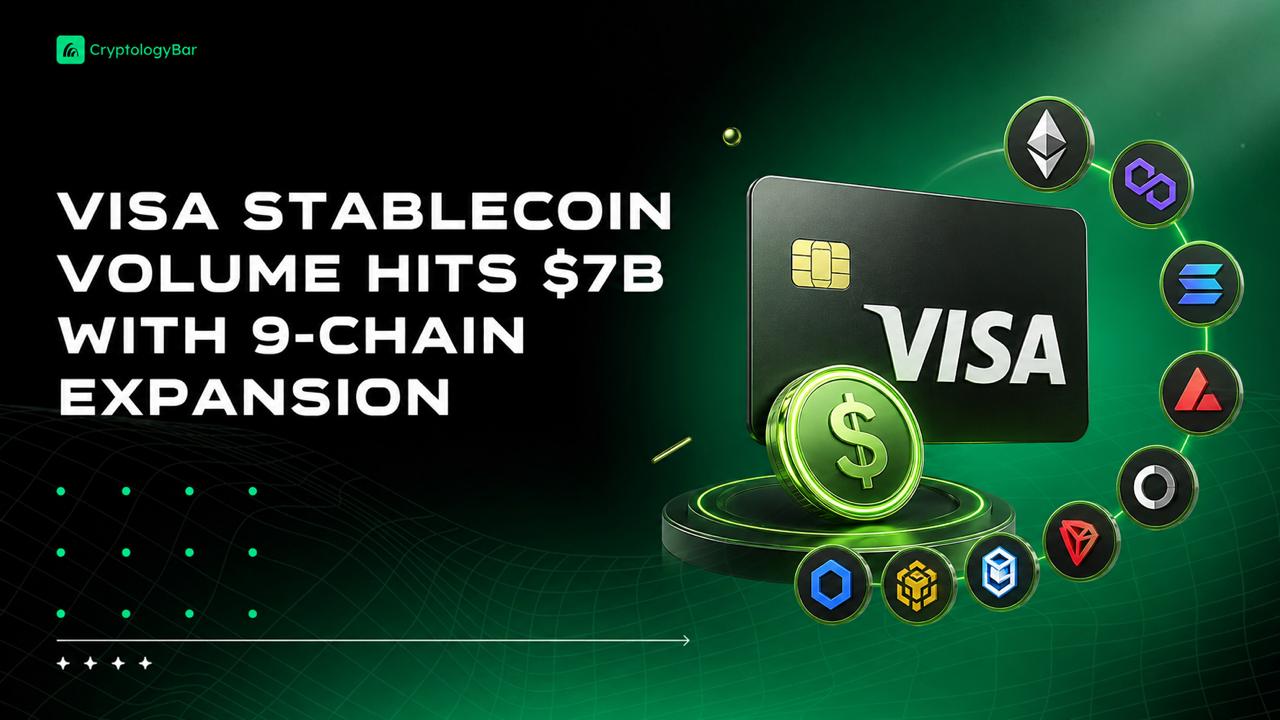
Visa Stablecoin Volume Hits $7B with 9‑Chain Expansion
The world of traditional finance and digital assets is merging faster than many expected, and Visa is leading the charge. In a significant move to modernize global money movement, Visa has announced a major expansion of its stablecoin settlement capabilities. By integrating with high‑performance blockchains like Solana, the payments giant is moving beyond experimental pilots and into full‑scale commercial utility.
This expansion isn’t just about adding new technology; it’s about solving the age‑old problem of speed in cross‑border payments. For decades, moving money across borders meant waiting days for clearing houses to settle transactions. By utilizing stablecoins like USDC, Visa can now move value almost instantly, 24 hours a day, without the typical delays associated with traditional banking hours.
The Massive Growth of On‑Chain Volume
The numbers behind this shift are staggering. Visa’s stablecoin settlement network has now reached a run rate of $7 billion in monthly volume. This figure highlights a growing appetite among merchants and financial institutions for faster, more transparent payment rails. It shows that stablecoins are no longer just a tool for crypto traders; they are becoming a fundamental part of the global financial plumbing.
To achieve this level of scale, Visa has been working closely with merchant acquirers like Worldpay and Nuvei. These partnerships allow businesses to receive settlements in digital assets rather than waiting for traditional wire transfers. It is a win‑win scenario that provides merchants with better liquidity and lowers the overall friction of doing business on a global scale.
Why the Move to Solana Matters
A key part of Visa’s strategy is its decision to utilize the Solana blockchain. While Ethereum has long been the dominant force for stablecoins, Solana offers the high throughput and low transaction costs necessary for a company that handles thousands of payments every second. Visa’s engineering team noted that Solana’s ability to process transactions quickly makes it an ideal partner for real‑time settlement.
By adding Solana to its supported networks alongside Ethereum, Visa is building a multi‑chain future. This approach ensures that the company can offer its clients flexibility, allowing them to choose the network that best fits their speed and cost requirements. It also signals to the broader tech industry that mainstream finance is now comfortable building on top of public, decentralized infrastructure.
Redefining the Future of Payments
Visa’s leadership believes that stablecoins and blockchains are the next natural evolution of the payments industry. Just as the world moved from paper checks to plastic cards, and then to mobile wallets, the move to on‑chain settlement represents the next great leap forward.
As the $7 billion run rate continues to climb, the message is clear: the digital currency era is officially here. Visa is no longer just watching from the sidelines; it is actively building the tracks for a more efficient, inclusive, and instant global economy. For investors and consumers alike, this represents a new chapter where the distance between "crypto" and "cash" is rapidly disappearing.