

Sophia Bennett
Crypto Analyst
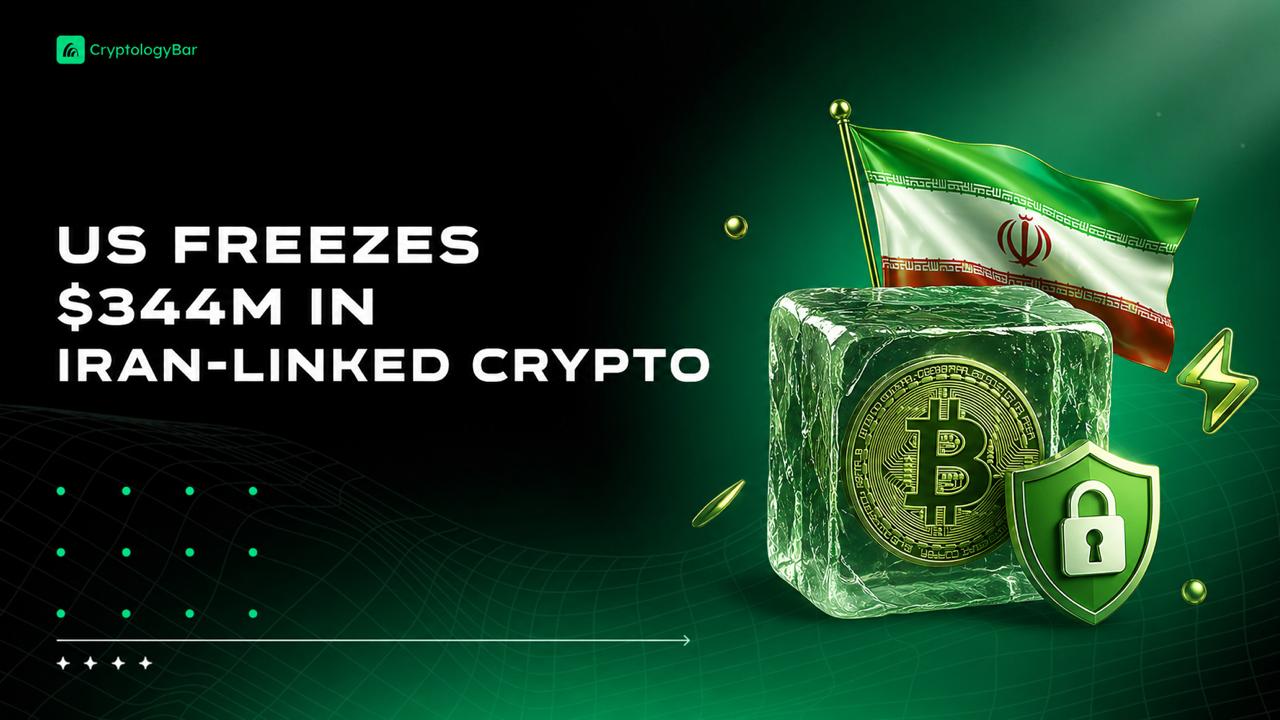
The United States has frozen around $344 million worth of cryptocurrency tied to Iranian entities, marking one of the largest enforcement actions involving digital assets.
The move was announced by Treasury Secretary Scott Bessent, with authorities sanctioning multiple crypto wallets linked to Iran. The action is part of a broader effort to disrupt financial networks connected to sanctioned groups.
Officials say the goal is clear, cut off funding channels that may be used to bypass traditional financial restrictions.
Tether and Tron Wallets at the Center
Most of the frozen funds were held in USDT (Tether) and stored across wallets on the Tron blockchain.
Tether confirmed that it worked with US authorities to block the assets by blacklisting the wallet addresses. This effectively made the funds unusable, even though they remain visible on the blockchain.
Two main wallets were targeted, reportedly holding over $200 million and $100 million respectively. These addresses were flagged after investigators identified patterns linked to Iranian financial activity.
The use of stablecoins like USDT highlights how digital assets are increasingly being used in global financial flows.
Part of a Broader Sanctions Strategy
The action is part of a wider US campaign aimed at limiting Iran’s ability to move money internationally.
Officials described the effort as targeting the country’s “financial lifelines,” especially as tensions in the Middle East remain high.
Authorities believe that Iranian‑linked entities, including groups tied to the state, have been using crypto to bypass sanctions and move funds across borders.
This latest move adds to a growing list of enforcement actions where blockchain analysis and cooperation with crypto firms are used to track and block transactions.
Crypto’s Role in Sanctions Evasion
Over the past few years, cryptocurrencies have become an alternative channel for countries facing financial restrictions.
Iran, in particular, has increased its use of digital assets as access to the global banking system became more limited. This includes using crypto for trade, payments, and even energy‑related transactions.
Because blockchain transactions can move quickly and across borders, they offer a way to bypass traditional systems, but they also leave a public record that authorities can track.
This balance between transparency and decentralization is now at the center of regulatory debates.
Market and Industry Impact
The freeze highlights how centralized elements within crypto, such as stablecoin issuers, can play a key role in enforcement.
While blockchains like Tron continue to operate normally, companies like Tether can intervene at the token level, freezing funds when required.
This has sparked ongoing discussion within the crypto community about decentralization, control, and compliance.
At the same time, it shows that governments are becoming more effective at monitoring and acting on blockchain activity.
The Bottom Line
The US Treasury’s move to freeze $344 million in Iran‑linked crypto marks a significant escalation in how digital assets are being used, and regulated, in global finance.
It highlights both the growing role of crypto in international transactions and the increasing ability of authorities to track and control it.
For now, the message is clear: even in decentralized markets, regulation and enforcement are catching up quickly.