

Ethan Caldwell
Crypto Analyst
Bitcoin mining is one of the most important yet often misunderstood aspects of Bitcoin. It is the backbone that keeps the network secure, operational, and decentralized. While many people associate Bitcoin with trading or investing, mining is the process that actually powers the system behind the scenes. To truly understand Bitcoin, it is essential to explore how mining works, whether it is profitable, and what impact it has on the environment.
What is Bitcoin Mining?
Bitcoin mining is the process through which new transactions are verified and added to the blockchain. It also serves as the mechanism by which new Bitcoins are introduced into circulation. In traditional money systems, central banks print money. Bitcoin, on the other hand, depends on miners, who use their computers to keep the network running.
At its core, mining is about solving complex mathematical problems. These problems are not arbitrary; they are part of the system that ensures transactions are legitimate and that no one can spend the same Bitcoin twice. Once a miner successfully solves a problem, they are allowed to add a new block of transactions to the blockchain and are rewarded with Bitcoin.
How the Mining Process Works
The mining process begins when Bitcoin transactions are broadcast to the network. These transactions are collected into a block, which miners then attempt to validate. To do this, they must solve a cryptographic puzzle that requires significant computational effort.
This process is part of what is known as Proof of Work, a system that ensures all participants agree on the state of the blockchain. Miners compete against each other to solve the puzzle, and the first one to succeed earns the right to add the block to the chain.
Once the block is added, it becomes part of the permanent record maintained through Blockchain. This record is transparent, secure, and nearly impossible to alter. The difficulty of the puzzles adjusts automatically based on the network’s total computing power, ensuring that blocks are added at a consistent rate.
The Role of Mining Hardware
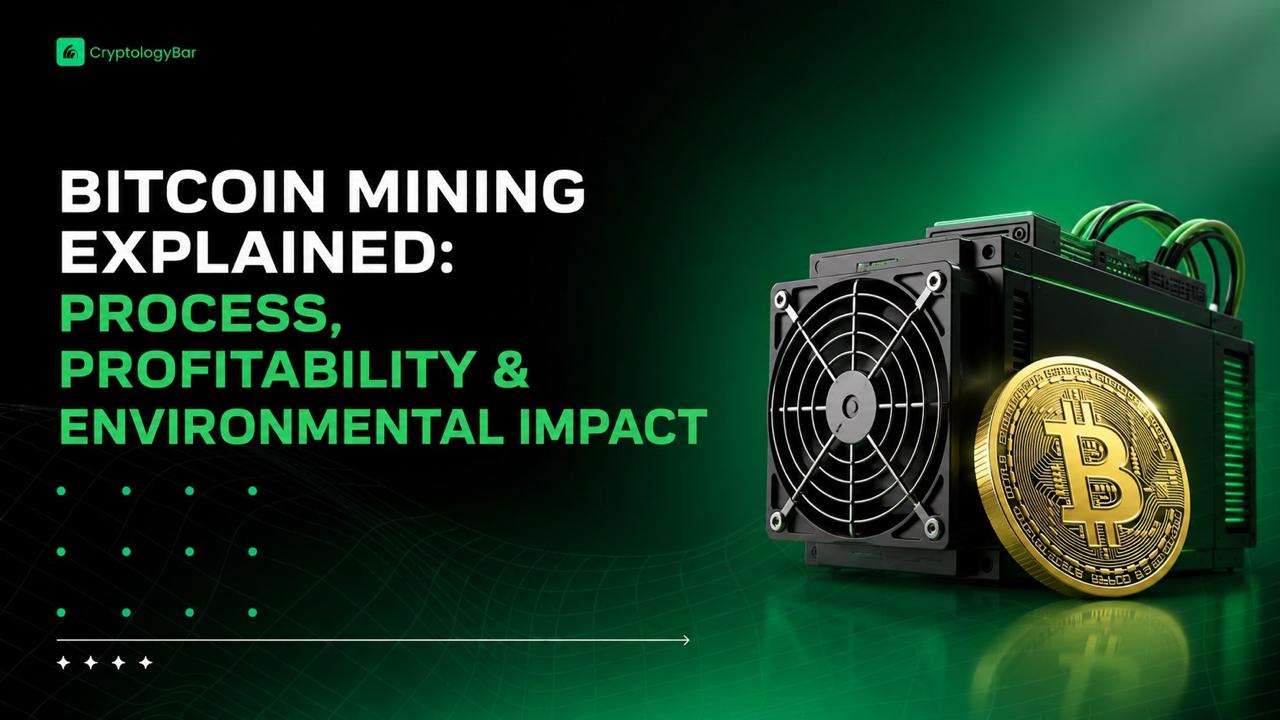
In the early days of Bitcoin, mining could be done using ordinary computers. However, as the network grew and competition increased, more specialized hardware became necessary. Today, most mining is performed using Application‑Specific Integrated Circuits (ASICs), which are designed specifically for solving Bitcoin’s cryptographic puzzles.
These machines are highly efficient but also expensive and energy‑intensive. As a result, mining has become increasingly industrialized, with large mining farms operating in regions where electricity is cheaper. This shift has made it difficult for individual miners to compete, leading to the rise of mining pools where participants combine their resources to increase their chances of earning rewards.
Understanding Mining Rewards
Mining rewards are the primary incentive for participants to contribute their computational power to the network. When a miner successfully adds a block to the blockchain, they receive a reward in the form of newly created Bitcoin, along with transaction fees from the transactions included in the block.
However, these rewards are not constant. Bitcoin undergoes an event known as “halving” approximately every four years, during which the block reward is reduced by half. This mechanism ensures that the total supply of Bitcoin remains limited to 21 million coins.
As rewards decrease over time, transaction fees are expected to play a more significant role in compensating miners. This evolving reward structure is an important factor in assessing the long‑term sustainability of mining.
Is Bitcoin Mining Profitable?
The profitability of Bitcoin mining depends on several factors, including the cost of hardware, electricity prices, network difficulty, and the market price of Bitcoin. In regions with low electricity costs and access to efficient hardware, mining can still be profitable.
However, the increasing difficulty of mining and the rising cost of equipment have made it more challenging for newcomers to enter the space. Profit margins can fluctuate significantly based on Bitcoin’s price, which is known for its volatility. During periods of high prices, mining can be highly lucrative, but during downturns, it may become less viable.
Many miners approach the activity as a long‑term investment rather than a short‑term profit opportunity. They often hold onto the Bitcoin they earn, anticipating that its value will increase over time.
The Rise of Mining Pools
As mining has become more competitive, individual miners have found it increasingly difficult to succeed on their own. This has led to the growth of mining pools, where multiple participants combine their computational resources and share rewards based on their contribution.
Mining pools provide more consistent earnings compared to solo mining, although the rewards are smaller since they are divided among participants. This collaborative approach has made mining more accessible, but it has also raised concerns about centralization if too much power becomes concentrated in a few large pools.
Environmental Impact of Bitcoin Mining
One of the most debated aspects of Bitcoin mining is its environmental impact. The process requires a significant amount of electricity, as miners continuously run powerful machines to solve complex problems. This energy consumption has raised concerns about carbon emissions and sustainability.
Critics argue that Bitcoin mining contributes to environmental degradation, particularly when powered by fossil fuels. However, supporters point out that many mining operations are increasingly using renewable energy sources such as hydroelectric, solar, and wind power.
In some cases, mining has even helped utilize excess energy that would otherwise go to waste. For example, surplus energy from remote power plants can be redirected to mining operations, improving overall energy efficiency.
Efforts Toward Sustainable Mining
The environmental concerns surrounding Bitcoin mining have prompted efforts to make the process more sustainable. Many mining companies are actively seeking cleaner energy sources and improving the efficiency of their hardware.
Innovations in cooling systems, energy management, and location selection are helping reduce the environmental footprint of mining operations. Additionally, some governments and organizations are encouraging the use of renewable energy in mining activities.
While challenges remain, the industry is gradually moving toward more sustainable practices, balancing the need for security with environmental responsibility.
The Future of Bitcoin Mining
Bitcoin mining continues to evolve as technology advances and the network grows. As block rewards decrease and competition increases, miners will need to rely more on efficiency and innovation to remain profitable.
The role of mining in securing the Bitcoin network will remain essential, even as discussions about alternative consensus mechanisms continue in the broader cryptocurrency space. Bitcoin’s reliance on Proof of Work is a defining feature that sets it apart from many newer cryptocurrencies.
Final Thoughts
Bitcoin mining is a complex but fascinating process that lies at the heart of the cryptocurrency ecosystem. It not only validates transactions and secures the network but also introduces new Bitcoin into circulation.
While mining offers potential profitability, it also comes with challenges, including high costs and environmental concerns. Understanding these factors is crucial for anyone interested in the future of digital currencies.
As people around the world continue to learn more about decentralized finance, Bitcoin mining will remain a major topic of conversation. It will continue to shape both the opportunities and challenges of the changing financial landscape.