

Akshita Jhalani
Crypto Analyst
I was just beginning to feel cautiously optimistic about Bitcoin's July recovery. The move from $58,000 to $64,500 was real. ETF inflows had started trickling back. The macro backdrop felt slightly less hostile. And then, on Tuesday morning, everything that had been holding the recovery together got hit simultaneously.
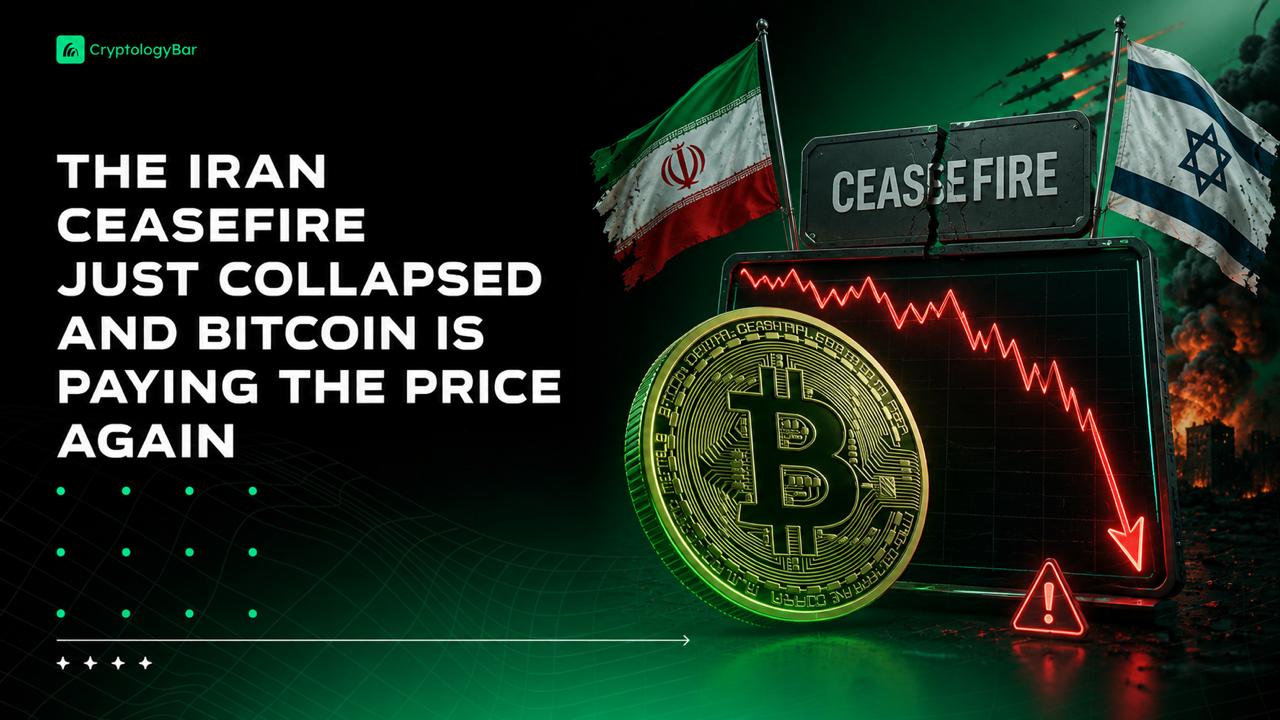
The U.S.-Iran ceasefire, the diplomatic progress that contributed directly to Bitcoin's bounce off its lows, has collapsed. U.S. and Iranian forces exchanged airstrikes. Trump addressed NATO leaders and declared the ceasefire officially over. He called negotiating with Iran a waste of time. And markets moved hard and fast.
What Happened in the Markets This Morning
Oil surged more than 6% in a matter of hours. The Strait of Hormuz is back in focus as a strategic choke point for global energy flows. Dow Jones futures dropped more than 700 points. The Dollar Index climbed, reflecting a flight to safety that always hurts Bitcoin specifically because it trades as a dollar‑denominated risk asset.
Bitcoin fell back below $62,000, down more than 2% in 24 hours. Ether dropped a similar amount to around $1,730. Solana was the hardest hit among major tokens, wiping out its entire July gain in a single session. XRP fell more than 4%.
The CoinDesk 20 Index dropped nearly 3% since midnight UTC, with all but one token declining. Total liquidations across the market reached $450 million, and the altcoin sector absorbed $350 million of that, with JUP, ETHFI, and PUMP each falling between 5.5% and 9.3%.
Why This Specific Conflict Is So Damaging for Bitcoin
The Iran war is not just a geopolitical headline for crypto markets. It's an inflation event, and inflation is the single most persistent macro headwind Bitcoin has faced throughout 2026.
The conflict began in late February and drove oil above $100 a barrel, generating a global inflationary shock. The Fed, already hawkish, had even more justification to hold rates high rather than cut. Higher rates make bonds attractive and Bitcoin less so. The ceasefire progress that helped oil retreat below $70 was also one of the conditions that gave the market some optimism about rate cuts arriving sooner.
Today's collapse of that ceasefire removes that optimism. Oil back above $75 and rising means inflation expectations move higher again. Higher inflation expectations mean the Fed stays tight. A tight Fed is bad for risk assets. Bitcoin is the most rate‑sensitive risk asset in the major market universe.
The Conflicting Inflation Signals
Here's what makes this particularly complicated. Fed Chair Warsh has stated that the central bank remains committed to getting inflation back to 2%. Market‑based inflation measures, called breakevens, are sitting at or below 2% at the short end, suggesting institutional money doesn't believe inflation will persist.
But consumer sentiment surveys are telling a different story. And rising energy prices, if they stay elevated, could make those consumer fears self‑fulfilling. The Fed tends to trust breakeven data over consumer surveys, but it can't entirely ignore Main Street, especially when oil prices are jumping 6% in a morning.
Where Bitcoin Actually Stands Right Now
Despite the Tuesday hit, Bitcoin is still up approximately 6% on the month. The short positioning that got squeezed out during July's early rally doesn't appear to be building back aggressively, open interest dropped from 740,000 BTC to 730,000 BTC, which suggests traders aren't piling back into shorts yet.
Options markets are more cautious. The one‑week put skew on Deribit jumped to nearly 20% in favor of puts from 16% the day before. Implied volatility indexes are rising for a second consecutive day. But interestingly, the highest 24‑hour call option volume sits at the $80,000 strike, meaning some traders are still positioning for a meaningful recovery even while hedging against near‑term downside.
What I'm watching most carefully now is whether oil stabilizes or keeps running. If it does, the inflation and rate narrative that crushed crypto through most of 2026 comes roaring back. If the geopolitical situation de‑escalates quickly, as it has done before in this conflict, the macro tailwind that was just starting to develop could return.
For now, the ceasefire is over. And Bitcoin is trading accordingly.