

Akshita Jhalani
Crypto Analyst
I've been watching Tether quietly build one of the most unusual portfolios in crypto for the past two years. Stablecoins, AI infrastructure, bitcoin mining, energy projects, robotics. But the move I'm covering today is the one that pulls all the gold it has been accumulating into something actually functional, and I think it's smarter than it sounds at first glance.
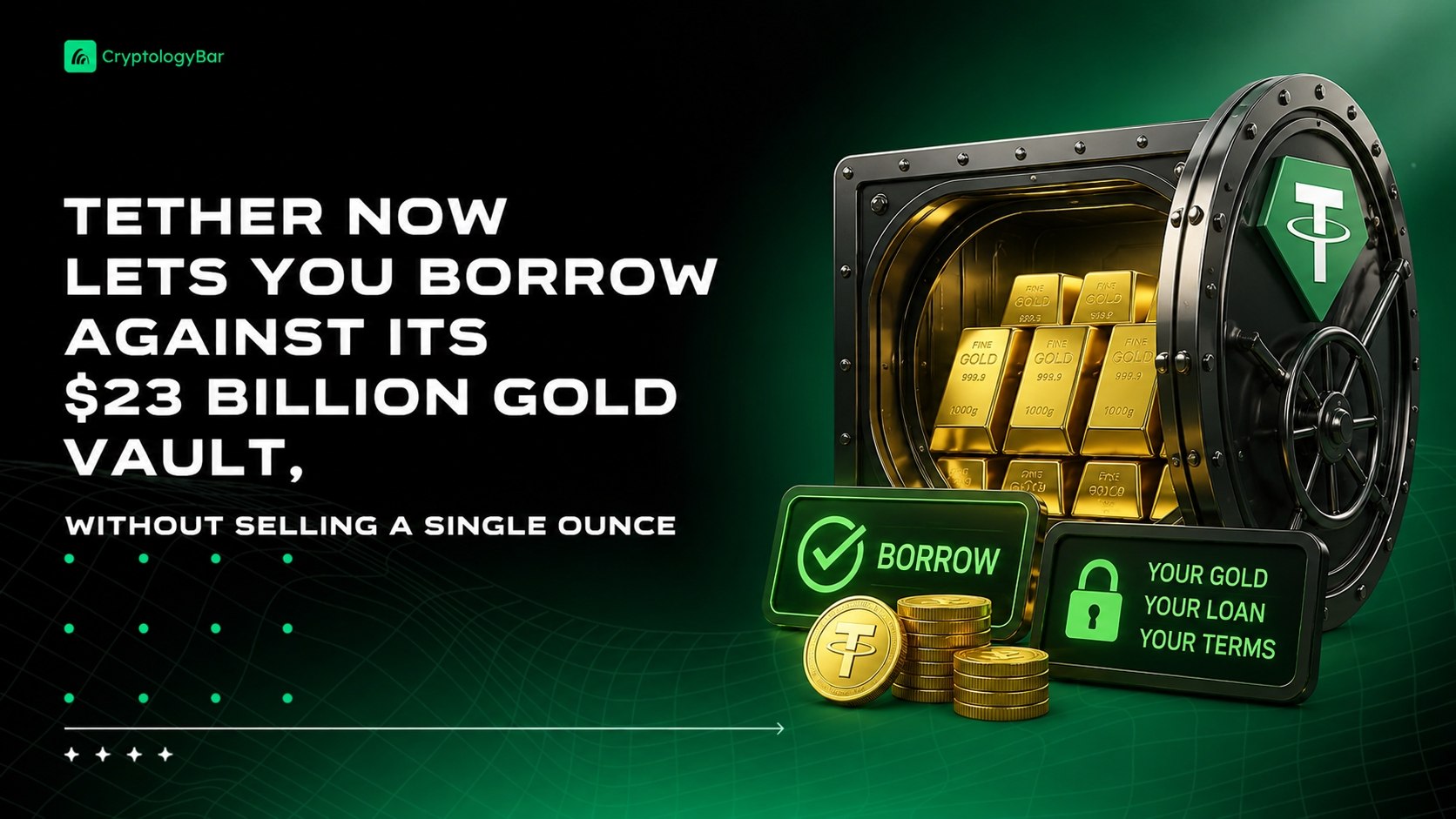
Tether has partnered with crypto lender Ledn to bring its tokenized gold product, Tether Gold or XAUT, to the platform. Holders of XAUT will be able to use it as collateral to borrow against their gold holdings later this year, without ever having to sell the physical bullion underneath.
What XAUT Actually Is
Each XAUT token represents one troy ounce of physical gold sitting in vaults in Switzerland. Tether currently holds approximately 140 metric tons of bullion backing the product, one of the largest privately held gold reserves in the world by any corporate entity, with the total value sitting near $23 billion.
Until now, that gold has been essentially static. It backs the token. It sits in vaults. It appreciates or depreciates with the gold price. But it doesn't do anything productive for the people holding it.
Gold‑backed lending changes that entirely.
The Bitcoin Lending Model Applied to Gold
Here's the concept that Tether and Ledn are bringing to life: the same financial mechanics that make Bitcoin‑backed loans work should work equally well for tokenized gold. Ledn has operated Bitcoin‑backed lending for years, borrowers put up BTC as collateral and receive dollar loans without triggering a taxable sale of their underlying asset. The Bitcoin stays in custody, the loan gets issued, and the borrower gets liquidity.
XAUT‑backed loans mirror that structure exactly. Ledn confirmed that client collateral will be held on a one‑to‑one basis, without being lent out or used to generate yield on the backend. That's a deliberate and direct contrast to the practices of several crypto lenders that collapsed during the 2022 bear market, Ledn is drawing a clear line between its model and those failures.
Tether CEO Paolo Ardoino described the reasoning in a statement: as digital assets become an increasingly important part of the global economy, demand grows for solutions that combine long‑term ownership with financial flexibility.
That sentence is doing real work. Long‑term ownership plus financial flexibility is exactly what this product provides. You keep your gold exposure. You get your dollar liquidity. You don't sell.
Tether's Expanding Empire
I want to zoom out for a moment because this gold lending story is one piece of a much larger picture. Tether is no longer just a stablecoin company, it genuinely hasn't been for a while. It has invested in bitcoin mining operations, renewable energy projects, AI infrastructure through Northern Data, precious metals marketplace Gold.com, and Neura Robotics through the $1.4 billion round I covered earlier this year.
The gold strategy specifically has been building systematically. Tether grew the XAUT product, accumulated 140 metric tons of physical bullion, invested in Gold.com to improve distribution, and partnered with Antalpha to expand lending and physical redemption. Today's Ledn announcement is the next step in that sequence, turning a static reserve into a functioning financial product.
For a company that generated over $10 billion in profit in the first nine months of 2025, Tether has the resources to keep building this way indefinitely. The gold lending launch is further evidence of exactly where it's choosing to build next.