

Sophia Bennett
Crypto Analyst
When Pepe Unchained launched its presale in mid‑2024, most people expected another forgettable frog‑themed token riding the coattails of the original PEPE's success. What they got instead was something genuinely different, a project that didn't just slap a meme on a smart contract, but actually tried to build infrastructure around it. Whether that ambition paid off is a more complicated story.
What Is Pepe Unchained, Actually?
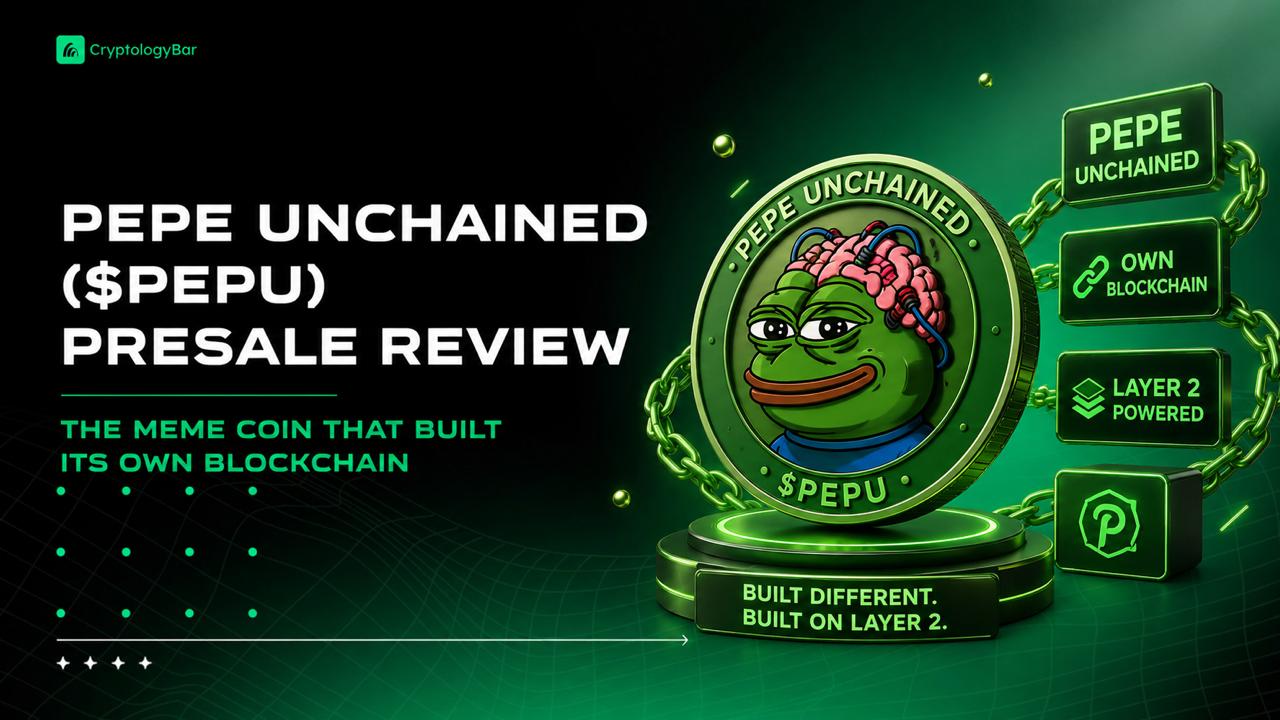
At its core, Pepe Unchained ($PEPU) is a meme coin with a Layer 2 blockchain attached to it. The pitch, laid out in the project's whitepaper, is straightforward: Ethereum's Layer 1 is slow and expensive, which makes meme coin trading frustrating. High gas fees eat into profits, especially for smaller traders who are moving in and out of positions quickly. Pepe Unchained's answer was to build a dedicated "Pepe Chain", an Ethereum Layer 2 initially built on the OP Stack, designed specifically for meme culture.
The chain promised 100x the transaction throughput of Ethereum mainnet, low and predictable gas fees, full Ethereum compatibility, and a native ecosystem of tools built on top of it. These included a block explorer (PepuScan), a bridging solution for moving assets between Ethereum and the Pepe L2, a decentralised exchange (PepuSwap), and a meme coin launchpad called PumpPad. It was one of the more coherent technical visions to come out of the meme coin space in 2024.
The Presale by the Numbers
The $PEPU presale launched in June 2024 and ran for around six months. It raised $74 million in total, a figure that made it one of the largest meme coin presales on record. The campaign followed a dynamic pricing model, starting at prices below $0.01 and incrementally rising through multiple stages as funding milestones were hit. By the final weeks, $PEPU was priced at around $0.01289.
The fundraising momentum was hard to ignore. By late August, the project had crossed $10 million. By late October, it was past $23 million. And in the final weeks of the presale, after the team announced a listing date and exchange discussions, the daily inflow spiked, peaking at $2.3 million in a single day, with an average of $1.6 million per day in the final week.
Institutional‑scale buyers, often referred to as whales in crypto circles, were visibly active. On‑chain data showed one wallet purchasing 2.2 million PEPU tokens for approximately $27,000, and similar purchases were tracked throughout the campaign.
Tokenomics and Distribution
The original total supply was set at 8 billion $PEPU tokens. Of that, 20% was allocated to the presale. The largest single allocation, 50%, went to community rewards, meaning staking incentives and ongoing ecosystem participation. Marketing received 10%, liquidity 10%, project finance 5%, and chain infrastructure 5%.
The staking mechanism was live during the presale itself, with rewards distributed at a rate of 608.82 PEPU per Ethereum block, doubled on the L2 chain and paid out over two years. At peak, the staking APY sat around 99%, drawing in a significant portion of presale participants who wanted to compound their holdings before the token listed publicly.
It's worth noting that the total supply was later doubled to 16 billion $PEPU following a chain migration in mid‑2025, a material change that any investor looking at the project today should factor into their analysis.
Security and Audits
One thing Pepe Unchained did right early on was pursue independent smart contract audits. Both SolidProof and Coinsult reviewed the PEPU contracts during the presale period, and neither returned critical findings. For a meme coin raising tens of millions of dollars from retail investors, having documented audit results publicly available was a meaningful signal of at least basic operational integrity.
The project also secured a spot on DexTools, BitMart, MEXC, and LBank after launch, giving it exchange coverage across multiple platforms.
What the Presale Was Selling
Beyond the token, the presale was really selling a vision: a meme coin ecosystem where Pepe wasn't just a mascot but a brand with real blockchain infrastructure behind it. The developer grant initiative, branded "Pepe Frens With Benefits", invited external builders to create dApps on the Pepe L2 in exchange for funding from a project‑controlled grant pool. Applications were set to open in Q4 2024, aimed at accelerating the ecosystem beyond what the core team could build alone.
The narrative resonated because it was timely. In 2024, the meme coin space was maturing in odd ways: tokens were getting bigger but infrastructure was lagging. Solana had captured a lot of meme coin activity partly because Ethereum was simply too expensive for small trades. Pepe Unchained positioned itself as an Ethereum‑native answer to that problem, keep meme culture on the chain it started on, just build a faster lane for it.
What Happened After Launch
Here is where the story gets harder to tell with enthusiasm. $PEPU listed on Uniswap in December 2024, initially surging around 200% on its first day of trading. That initial spike, however, was followed by a prolonged and severe decline. As of early 2026, the token trades at a fraction of its listing price, with a market cap of roughly $2 to $2.5 million, a steep fall from the $74 million raised in presale.
The chain itself also ran into technical problems. The original Layer 2 infrastructure, built using a provider called Conduit, became untenable after Conduit deprecated custom gas tokens, a feature central to how Pepe Chain operated. The team responded by migrating to Arbitrum in mid‑2025 and deploying a new token contract in the process, which also doubled the total supply. PumpPad was relaunched on the new Arbitrum‑based chain, and the ecosystem continues to operate, though at significantly reduced activity levels.
The Honest Assessment
The Pepe Unchained presale is a case study in both the possibilities and the risks of crypto fundraising. The team raised an enormous amount of money on a genuinely interesting idea. The technical vision, a dedicated meme coin L2 with its own DEX, bridge, and launchpad, was more substantive than most projects in its category. The audits were done. The roadmap was published. The community was real.
And yet the post‑launch performance tells a different story. Presale valuations rarely survive contact with open markets intact, and $PEPU was no exception. The chain migration, supply doubling, and sharp price decline all represent significant risks that presale participants absorbed without warning.
For anyone evaluating the presale retrospectively, the lesson is a familiar one in crypto: the quality of an idea and the scale of its fundraising are not reliable predictors of token performance. Pepe Unchained raised more than most projects ever will, built more than most meme coins ever do, and still ended up where it is. That outcome doesn't make the presale dishonest, it makes it a sobering reminder of how difficult it is to turn a bold vision into lasting market value.
Disclaimer: This article is for informational purposes only and does not constitute financial or investment advice. Cryptocurrency investments carry significant risk, including the possible loss of all invested capital. Always conduct independent research before making any financial decisions.