

Rajneesh Sachdeva
Crypto Analyst
TL;DR
Most crypto news is noise. Regulation, ETF flows, hacks, Fed decisions, and big upgrades move markets. Influencer threads and paid shills usually don't. Cross-check sources, assume headlines are priced in, and never trade on raw emotion. Slow down and you'll lose less money.
Key takeaways
- Real movers are regulation and policy, ETF and institutional flows, major hacks, Fed and macro decisions, big protocol upgrades, and exchange solvency scares.
- Most of what fills your feed is hype, paid promotion, or recycled speculation that changes nothing about the actual chain or company.
- By the time you read a headline, the price has often already moved, so reacting fast usually means reacting late.
- Cross-check every big claim against a reputable outlet or the primary source before you touch a buy or sell button.
- Panic selling and FOMO buying are the two most reliable ways retail traders hand their money to someone calmer.
You open your phone and the feed is already screaming. A token's up 40%. Some exchange is "in trouble." A famous account says this is the top, another says we're going to the moon by Friday. If you follow crypto news today the way most people do, you're basically drinking from a firehose that's half water and half sewage. And it's costing you money.
I've watched friends sell perfectly good positions because of a headline that turned out to be nothing. I've done it myself. So this is the guide I wish someone had handed me years ago: how to actually follow crypto news without letting the noise run your decisions.
Let me be blunt up front. Most of what shows up under the label of crypto news isn't news. It's chatter, speculation, and marketing. The trick is knowing which ten percent matters.
What crypto news actually moves markets
Some events genuinely change prices because they change either the money flowing in or the risk of holding. Those are worth your attention. Here's the short list I keep in my head.
- Regulation and policy. When a government decides how crypto gets taxed, traded, or banned, that reshapes who can buy and how much. This is the heavy stuff.
- ETF and institutional flows. When big regulated funds start buying or selling, they move volume retail simply can't match.
- Hacks and exploits. A drained protocol or a compromised exchange is a real, measurable loss. That fear is rational.
- Fed and macro decisions. Interest rates and liquidity affect every risk asset, and crypto is about as risk‑on as it gets.
- Major upgrades. A real network change to something like Ethereum's mechanics can shift supply, fees, and how the whole thing works.
- Big token release and releases. When a pile of previously locked tokens hits the market, supply jumps and price often sags.
- Exchange solvency. If people start doubting whether a platform can return their funds, that doubt alone can trigger a run.
Notice a pattern? Every one of these ties to real money or real risk. Not vibes. Not a screenshot. Something concrete that actually shifts the board.
And what's just noise
Now the other side. A stunning amount of crypto coverage is filler, and once you learn to see it, you can't unsee it.
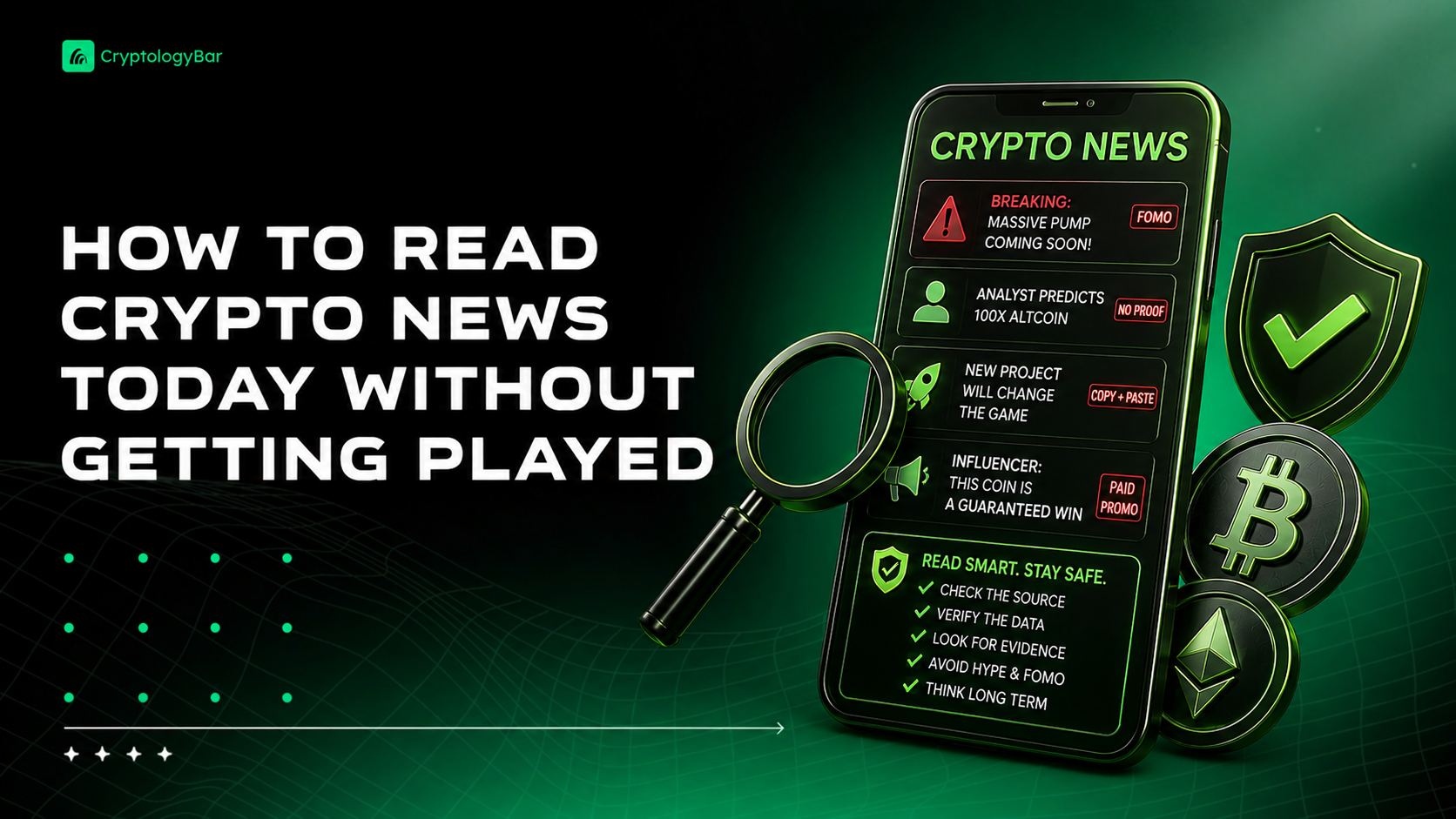
"Whale moves 5,000 ETH to exchange." Okay. And? Wallets move funds constantly. "Analyst predicts $200k by year end." That analyst also predicted it last year. "This coin could 100x." Anyone can say that about anything. Predictions are cheap. Nobody bills you when they're wrong.
Then there's the promotional layer. A lot of "news" about smaller tokens is paid placement, whether it says so or not. Someone got the coins early, they need buyers, and suddenly there's a wave of glowing coverage and threads calling it the next big thing. You're not the audience. You're the exit.
Hype like this doesn't tell you anything about the project. It tells you someone wants to sell. Learn to feel the difference.
The FUD and shill problem
Two forces are constantly working on your emotions, and both want you to act fast.
FUD is fear, uncertainty, and doubt, usually spread to knock a price down so somebody can buy cheaper, or just to farm engagement. A scary rumor about an exchange, a vague "something's wrong" post, a screenshot with no source. It spikes your cortisol and your finger hovers over the sell button. That's the whole point.
Shilling is the reverse. Manufactured excitement to push a price up. Paid promoters, coordinated groups, accounts that all post the same thing within an hour. The "insider alpha" Telegram group charging for tips is almost always selling you the bag they already bought.
Real edge, if it exists, doesn't get broadcast to 40,000 strangers for a monthly fee. Think about it. If someone genuinely had a money printer, why would they rent it to you?
Why the headline is already priced in
This one took me a while to internalize. Markets move on information the second it appears, and "the second" doesn't include you.
Bots read filings the moment they post. Faster traders react in milliseconds. By the time a story is packaged into a readable article and pushed to your feed, the obvious reaction has usually already happened. The price you see reflects the news you're just now reading.
So when you buy because of exciting news, you're often buying from the person who bought before the news broke. You're the later, slower money. That's not a moral failing, it's just structure. Understanding it stops you from chasing green candles into a wall.
There's an old saying: buy the rumor, sell the news. The reason it persists is that it's frequently true. The good stuff gets priced in during the whisper phase, and the actual announcement is when early buyers cash out.
Emotional trading is the real killer
Here's the uncomfortable truth. The news itself rarely destroys portfolios. Your reaction to it does.
Panic selling during a dip. FOMO buying at a local top. Revenge trading after a loss. These are the classic ways regular people bleed money, and news is the trigger for all of them. A headline hits, your heart rate jumps, and you make a decision your calmer self would never make.
The people on the other side of your panic trade are counting on exactly this. Volatility is where emotional traders donate to disciplined ones. I don't say that to be harsh. I say it because I've been on the donating side plenty of times.
A simple rule that's saved me real money: if a piece of news makes you want to trade immediately, wait. Sleep on it. If it still matters tomorrow, it was probably real. Most of the time, it won't matter tomorrow.
How to find sources you can actually trust
Not all sources are equal, and the loudest ones are often the worst. Here's how I vet what I read.
First, go for primary sources when you can. An official regulatory filing, a company's own statement, on‑chain data you can verify yourself. That's bedrock. Everything else is someone's interpretation of it.
Second, favor established outlets that actually do reporting, correct their mistakes, and keep opinion separate from fact. They're not perfect, and crypto media has its own hype problem, but a real newsroom has a reputation to protect. A random anonymous account doesn't.
Third, cross‑check anything big before you act. If one account is screaming about an exchange collapse and no reputable outlet has touched it, either you're very early or, far more likely, it's nonsense. Two independent confirmations beat one loud one every time.
And please, be skeptical of anyone whose whole vibe is urgency. "Buy now or miss out" is a sales tactic, not analysis.
A sane routine for staying informed
You don't need to watch the market every waking minute. In fact, that's how you lose your mind and your money. Here's a routine that keeps you informed without the doomscroll.
- Pick two or three trusted sources. That's it. Delete the rest of the noise from your feed.
- Check once or twice a day at set times, not every ten minutes. Set a rhythm and stick to it.
- When something big hits, verify it against a second reputable source before you form an opinion, let alone act.
- Separate "interesting" from "actionable." Most news is the first. Very little is the second.
- Before any trade driven by news, wait a beat and ask if it changes your original thesis. If not, do nothing.
- Log off. Seriously. The market runs 24/7, but you don't have to.
That's the whole system. Fewer sources, slower reactions, more verification. It's boring, and boring is exactly the point. The traders who last aren't the ones glued to every headline. They're the ones who learned that most headlines don't deserve a reaction.
One last thing. None of this is financial advice, and I'm not telling you what to buy or sell. I'm telling you how to read the flood of information without drowning in it. What you do with a clear head is your call.
Crypto news today is loud, fast, and mostly designed to make you feel something. The edge isn't reacting quicker than everyone else. It's caring about less. Follow the stuff that moves real money, ignore the theater, and give yourself permission to be a little bored. Your portfolio will thank you.