

Sophia Bennett
Crypto Analyst
One of DeFi's biggest lending protocols is changing how it vets assets, and the entire industry may soon follow.
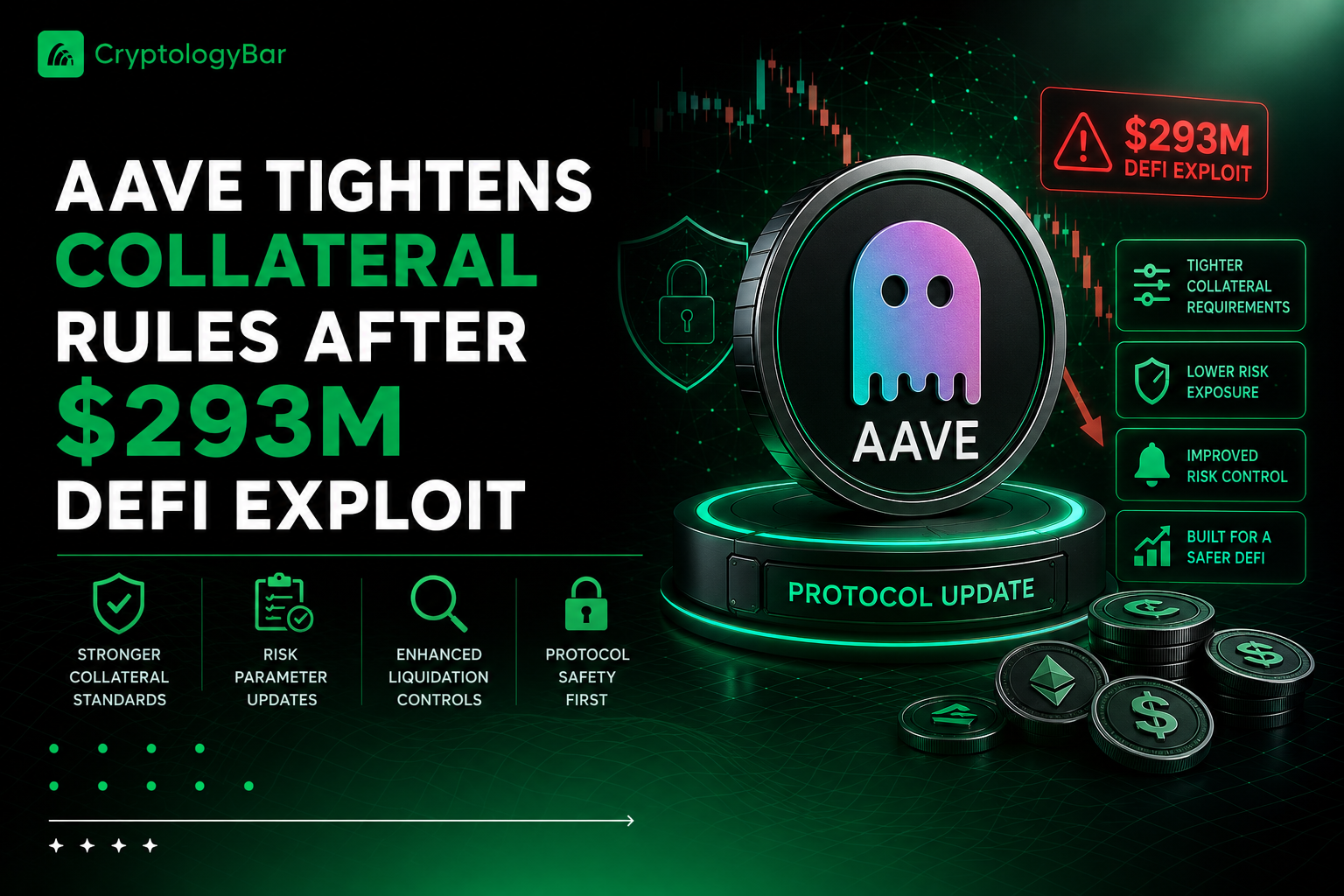
Aave Labs has announced a sweeping overhaul of how it assesses and lists collateral assets on its platform. The move comes after the largest DeFi exploit of 2026, which exposed a critical blind spot in how the protocol, and the broader industry, evaluates risk.
What Triggered the Overhaul
In April, an attacker exploited a vulnerability in KelpDAO's cross‑chain bridge. The attacker minted 116,500 unbacked rsETH tokens worth around $293 million and deposited them into Aave as collateral, borrowing real wrapped ether against them. The result was hundreds of millions in impaired debt sitting on Aave's books.
Linda Jeng, Chief Legal and Policy Officer at Aave Labs, described the weeks that followed as "two weeks of no sleep." Speaking at Consensus Miami 2026, she acknowledged the crisis had exposed real gaps in how the protocol evaluated collateral, gaps that went far beyond price volatility.
A Broader Risk Framework
Until now, Aave's asset listing process leaned heavily on financial risk metrics, things like price volatility and liquidity depth. That framework, while solid, wasn't built to catch what happened with rsETH.
Going forward, every asset seeking to list on Aave will be evaluated on a much wider set of criteria. That includes cybersecurity vulnerabilities, cross‑chain interoperability risks, and the underlying technical architecture of the asset itself. The goal is to catch potential failure points before they become protocol‑level crises.
"Out of a crisis like this, it ups our standards," Jeng said.
A Playbook for Asset Issuers
Aave won't just change how it reviews assets internally. The protocol plans to publish a formal playbook, a set of minimum standards that any project must meet before it can list on Aave. This gives asset issuers a clear benchmark and removes ambiguity from the process.
Jeng also revealed that Aave will begin examining systemic connections across DeFi protocols, moving away from assessing individual lending pools in isolation. The idea is to understand how risk in one part of the ecosystem can quickly ripple into another, something the KelpDAO exploit demonstrated with brutal clarity.
DeFi's Self‑Organised Response
For Jeng, who worked as a regulator during the 2008 financial crisis, the KelpDAO fallout felt familiar. But the response was different, and that matters.
Rather than waiting for a government‑led bailout, the DeFi industry mobilized on its own. An industry coalition called "DeFi United," backed by major names including Lido, EtherFi, and Ethena, stepped in to cover the collateral shortfall and prevent the bad debt from spreading further across lending markets.
"In the financial crisis, we had to bail out the banks," Jeng said. "Here, we came together as an ecosystem to bail ourselves out."
Setting a New Standard
Aave's changes are significant not just for the protocol itself, but for what they signal to the wider DeFi space. By raising the bar on collateral standards and publishing a clear framework for issuers, Aave is pushing for the kind of self‑regulation that could reshape how the entire industry approaches risk.
The exploit hurt. But the standards that come out of it may matter more in the long run.